If you have ever Googled yourself and found your photo on a site you never heard of, or discovered a client using work you thought you’d reclaimed, you already understand the problem. The web is engineered to move content outward — away from its creator and toward whoever finds it useful. Managing personal IP for creators means reversing that default, deliberately and practically, one step at a time.
Your Name, Face and Work Are Assets — Start Treating Them That Way
Personal IP is not a courtroom abstraction. It is the photographer’s portfolio, the consultant’s methodology document, the podcaster’s voice, the illustrator’s style guide. You already own these things. The question is whether you are acting like it.
A quick inventory of what counts: your name (especially in professional contexts), your likeness in photos and video, written and visual work you have created, recordings of your voice, your reputation as expressed in reviews or testimonials, and the data trail that platforms have built from your behaviour.
The default setting online is to hand all of this over. Every platform’s terms of service is written to expand the platform’s rights and narrow yours. Changing that default means reading before you post, choosing platforms consciously, and documenting what you own before someone else claims it.
Who Is Using Your Work Right Now (And Did You Say Yes?)
Start with a free audit. Drop your headshot into Google Reverse Image Search and see where it appears. Set up a Google Alert for your full name and the title of any well-known piece of work. Do this today — it takes under ten minutes and the results are often surprising.
What you find will fall into three buckets. Authorized use is work appearing somewhere you explicitly permitted. Fair use (a concept that varies significantly by country) covers things like commentary or education — a blog quoting two sentences of your article to critique it. Unauthorized use is everything else: your photo on a commercial website, your article republished in full without credit, your design sold by a third party.
Common places creators lose control without noticing include aggregator sites that scrape blog content, AI training datasets compiled from publicly accessible work, old employer websites that still display your portfolio, and stock-image-style repositories that have indexed your social posts. A freelance photographer once found forty of her travel images being sold through a site she had never interacted with — the images had been scraped from her public Instagram account.
Locking Down Your Likeness: Photos, Video and AI Replicas
Likeness rights — your legal interest in controlling how your face, voice and image are used commercially — vary considerably by country and, within the United States, by state. Do not assume the same rules apply everywhere. A lawyer familiar with your jurisdiction can tell you what protections actually exist for you.
Before you post, take three practical steps: embed your name and contact details in image metadata (most editing apps let you do this), add a visible or invisible watermark, and check whether the platform you are posting to offers an opt-out from AI training. Several major platforms have added such settings, though they are rarely switched on by default.
If you find a deepfake or AI-generated version of yourself being used commercially, document everything first — screenshots with URLs and timestamps. Then report to the platform. Services like PimEyes can help you monitor for unauthorized use of your face across the web, and some voice-cloning detection tools are emerging, though this space is moving fast.
Contracts That Actually Protect You (Without a Law Degree)
Three clauses belong in every freelance or creator contract. First, a clear statement of IP ownership — who owns the work and from what point. Second, a defined usage scope — exactly where, how and for how long the client can use the deliverable. Third, reversion rights — what happens to the work if the client stops paying, goes bust, or the project is cancelled.
Work-for-hire is the trap most freelancers fall into. A web developer built a custom plugin for a client under a contract that said “all work product becomes property of the client.” The developer later wanted to use a similar approach for another client and legally could not — she had signed away the underlying method. If a contract says “work for hire” or assigns all IP to the client, assume you are giving up ownership entirely.
You can add a simple IP reservation clause to your existing proposal: something like “Creator retains ownership of all underlying tools, frameworks and pre-existing materials. Client receives a licence to use the final deliverable for [specific purpose].” Free contract templates from organisations like the Graphic Artists Guild or Creative Commons are worth bookmarking — but customise the IP and usage clauses before you send anything.
Your Data Is Part of Your Personal IP Too
Platforms collect more than your posts. They collect behavioural data (what you click, how long you pause), content-derived data (topics you write about, sentiment patterns) and, increasingly, biometric data like voice prints and facial recognition markers. For creators, this matters because that data is used to build models and products that compete with or replicate your work.
If you are in the EU, the UK, California, or a growing number of other jurisdictions, you have legal rights to request deletion of your data, download a copy of it, and opt out of certain types of processing. Most platforms have a privacy settings page where these requests can be submitted — look for “Download your data” or “Delete account data.” The process is rarely instant, but it is real.
Before posting anywhere new, spend five minutes reading the platform’s terms around content licensing and AI training. If the terms say the platform can use your content to train AI models, that is not buried small print — it is a material decision about your personal IP for creators and it deserves your attention.
Building a Proactive Defense: Registrations, Records and Monitoring
Copyright attaches to original work automatically in most countries the moment it is created. Registration (in the US, through the Copyright Office for a modest fee) adds the ability to pursue statutory damages and creates a public record — worth doing for high-value work like a book, a course or a substantial photography portfolio.
Trademarking your name or brand is a bigger commitment: expect a process measured in months and costs that vary widely by country and complexity. It is worth exploring if your name is your business, but it is not the first thing to do. Start with records.
Create a simple evidence trail: export dated versions of your work, keep version histories in cloud tools, and take timestamped screenshots of published pieces. A founder who discovered someone had registered her brand name in another country was able to demonstrate prior use through three years of dated blog exports and social media archives — not a guarantee of success, but a much stronger starting position.
Set up free monitoring: Google Alerts for your name and key work titles, Copyscape for text, and reverse image search checks every few months. Catching a problem at the scraping stage is far easier than chasing it after it has spread.
When Something Goes Wrong: A Calm, Practical Response Plan
The first rule: document before you act. Screenshot the infringing page with the full URL visible, note the date, and save copies somewhere off-platform. Evidence disappears when you send a takedown notice, so capture it first.
A DMCA takedown notice (relevant for US-hosted content) requires: your contact information, identification of the copyrighted work, the URL of the infringing content, a statement of good faith, and your signature. Most major platforms have a dedicated form. Filing directly is free and often effective within days.
If a platform report does not resolve it, a cease-and-desist letter — which you can draft yourself or through a service like Rocket Lawyer — is the next step. It is a formal request, not a lawsuit. After that, if the infringement is significant and ongoing, speak to an intellectual property lawyer. Many offer a paid initial consultation that will tell you quickly whether escalation makes sense.
During a dispute, resist the urge to post about it publicly while it is unresolved. Document your position privately, communicate through proper channels, and protect your reputation by not making the conflict the story.
Frequently asked questions
Do I automatically own the content I post on social media platforms?
You generally retain copyright in the content you create, but when you post it to a platform you are granting that platform a licence to use it — often broadly. The exact scope of that licence depends on the platform’s terms of service, which change. Check the terms for any platform you use actively, particularly the sections on content licensing and AI training.
Can an AI company legally use my published work to train its models?
This is genuinely unsettled and varies by country. Arguments exist on both sides, and legal challenges are ongoing in several jurisdictions. What is clear is that some platforms explicitly licence user content for AI training in their terms — which is why reading those terms before you post matters. A lawyer can advise on your specific situation and jurisdiction.
What is the fastest thing I can do today to start protecting my personal IP?
Run a reverse image search on your most-used photo and set up a Google Alert for your name. Both are free and take under fifteen minutes. You will immediately know whether your content is already circulating somewhere you did not intend — and that knowledge is the starting point for everything else.
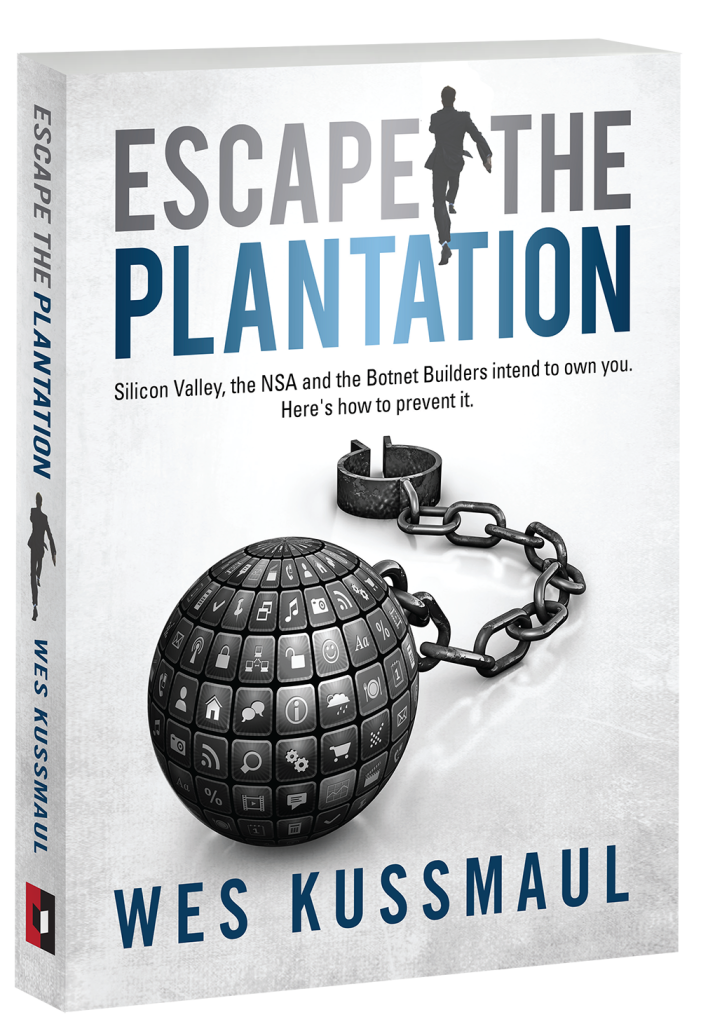
You own the information that identifies you — and the work you make with it. Personal IP publishes practical guidance on protecting what is yours. Subscribe for our creator guides, plus a free copy of Wes Kussmaul’s Escape the Plantation.
This article is general information, not legal advice. Laws differ by country — consult a qualified lawyer about your situation.