You find your photo on someone else’s website, your article copied word for word onto a content farm, or your design printed on a T-shirt you never licensed. A DMCA takedown notice is usually the fastest free way to get it removed. This guide explains how a takedown works, where to send it, what it must say, and how to prove the work is yours, which is the part most creators get stuck on.
What Is a DMCA Takedown?
The DMCA is the US Digital Millennium Copyright Act. One part of it gives websites, hosts and platforms legal protection from copyright claims, as long as they remove infringing material quickly once the copyright owner tells them about it. That message is a DMCA takedown notice.
In practice, it means you do not need a lawyer or a court order to get stolen work taken down. You send a properly written notice to the right place, and most services act within days.
Does it work outside the US?
Often, yes. The DMCA is US law, but most major platforms, search engines and hosting companies are based in the US or follow the same process worldwide. YouTube, Instagram, Facebook, TikTok, X, Etsy, Amazon and Google all accept DMCA-style copyright notices from anyone. In the UK and EU, hosts must also act on notices of illegal content, so a clear copyright notice usually works even where the DMCA itself does not apply.
Before You Send Anything: Can You Prove It Is Yours?
Copyright belongs to you automatically the moment you create original work. You do not need to register it to send a takedown. But the service receiving your notice cannot see inside your head. If the other person disputes your claim, it comes down to evidence.
Gather proof before you file:
- Original files. RAW photo files, layered design files, original audio sessions or manuscript drafts carry detail that copies do not.
- File metadata. Creation dates, camera information and editing history.
- Earlier publication. A link to where you published the work first, with a date. The Wayback Machine (web.archive.org) can show when a page existed.
- Work in progress. Sketches, drafts, outtakes and alternative shots from the same session.
- Registration, if you have it. A copyright registration certificate is strong evidence, and in the US it is needed before you can sue over a US work.
Then record the infringement: take dated screenshots, copy the exact web addresses, and save the page in the Wayback Machine before you contact anyone, because pages often disappear once their owner realises they have been found.
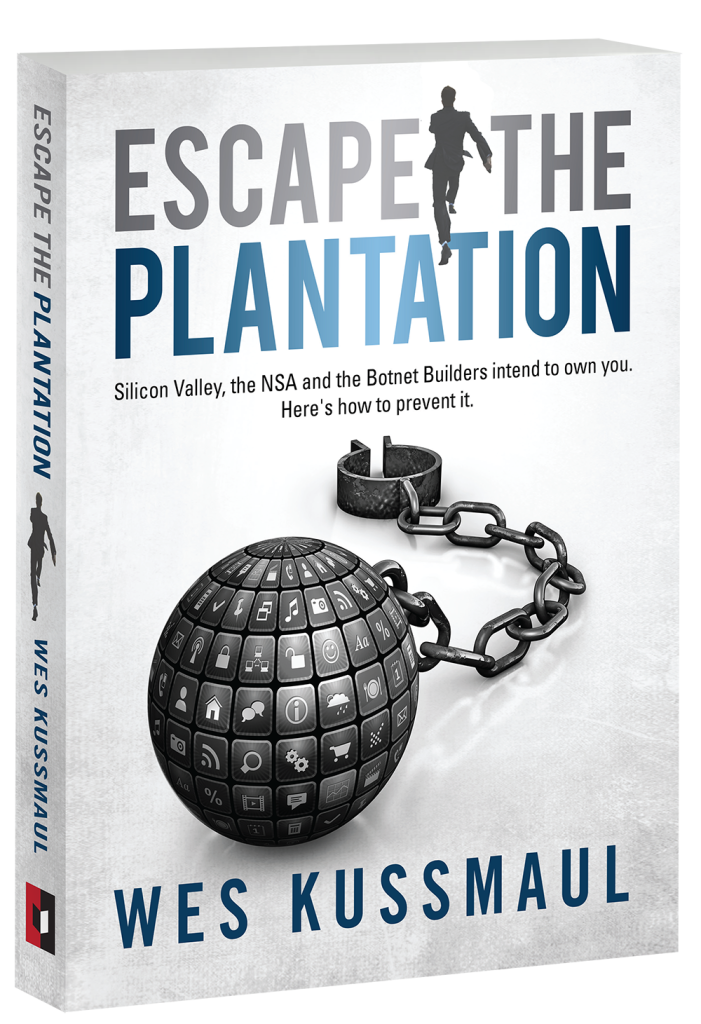
Proving that something you made is really yours should not be this hard. That problem, and how verifiable identity could solve it, is the subject of Wes Kussmaul’s Escape the Plantation, and you can get a free copy at the end of this article.
Where to Send a DMCA Takedown Notice
If the work is on a big platform
Use the platform’s own copyright form. Search for the platform’s name plus “copyright report” or “DMCA”. YouTube, Instagram, Facebook, TikTok, X, Pinterest, Etsy and Amazon all have dedicated forms, which are faster than email and ask for exactly the information they need.
If the work is on someone’s website
- Check the site itself for a “DMCA”, “copyright” or “legal” page with a named contact.
- Find the hosting company. Enter the site’s address in a free “who is hosting this site” lookup or a WHOIS search. The host has the power to remove the content even if the site owner ignores you.
- Look up the host’s designated agent. US-based services register an official DMCA contact with the US Copyright Office, searchable at dmca.copyright.gov.
- If the site uses Cloudflare, report it through Cloudflare’s abuse form. Cloudflare does not host the content itself, but it forwards your report to the real host and tells you who that is.
To remove it from search results
Google has a separate copyright removal form for search results. If the infringing page stays online, getting it removed from Google means far fewer people will find it. Do this alongside your notice to the host, not instead of it.
What a DMCA Takedown Notice Must Include
Under US law, a valid notice needs six things. Platform forms ask for all of them. If you are writing an email, include each one:
- Your signature, physical or electronic (typing your full name is usually enough).
- The original work: what it is, and where it can be seen, such as a link to your published version.
- The infringing material, with the exact web address of every copy you want removed.
- Your contact details: name, address, phone number and email.
- A good-faith statement that you believe the use is not authorised by you, your agent or the law.
- An accuracy statement that the information is accurate and, under penalty of perjury, that you are the owner or authorised to act for the owner.
A simple template
Subject: DMCA takedown notice
I am the copyright owner of [describe the work], originally published at [link to your original]. The following pages use my work without permission: [list each infringing URL]. I have a good faith belief that this use is not authorised by the copyright owner, its agent, or the law. The information in this notice is accurate, and under penalty of perjury, I am the owner of the copyright that is allegedly infringed. Please remove or disable access to this material. Contact: [your full name, postal address, phone, email]. Signed: [your full name], [date].
Your contact details may be passed on to the person you are complaining about. If that worries you, check whether the platform form allows you to use a business address or an agent.
What Happens After You Send It
Most platforms remove the content within a few days, sometimes within hours. You will usually get a confirmation, and the uploader is told that their content was removed because of a copyright complaint.
The uploader can then send a counter-notice saying the removal was a mistake or that their use is allowed. If they do, the service tells you and, under US law, can put the content back after 10 to 14 business days unless you show that you have started a court case. Most infringers never send one, because a counter-notice requires their real name and address.
If a site ignores you, go up a level: to the hosting company, then to the domain registrar, and remove the page from Google search results so it is hard to find.
Mistakes That Weaken a Takedown
- Claiming work that is not yours. Knowingly filing a false notice can make you liable for damages.
- Ignoring fair use. Short quotes for review, criticism, news reporting or parody may be allowed. Consider whether the use might be lawful before you file.
- Vague notices. “They stole my photos” without exact links gets rejected. List every URL.
- Sending it to the wrong place. A notice to a site owner who ignores email achieves nothing. The host and the platform are what count.
- Deleting your own evidence. Keep your originals and your screenshots safe until the matter is closed.
Watch Out for Fake DMCA Notices
If you run a website, be aware that scammers send fake takedown notices too. Some claim you have used their image and demand that you add a link to their site, which is a trick to win backlinks. Others include a link to “view the evidence” that downloads malware. Real notices name specific work and specific pages. Check any notice carefully before you click anything in it.
Frequently asked questions
How do I file a DMCA takedown?
Use the copyright report form on the platform where your work appears. For an independent website, find its hosting company and send a notice to the host’s copyright or abuse contact, including the six required elements. To remove the page from search, also use Google’s copyright removal form.
Do I need to register my copyright to send a DMCA takedown?
No. Copyright exists as soon as you create the work, and you can send a takedown without registering it. Registration helps as evidence, and in the US you need it before you can sue over a US work.
Can I send a DMCA takedown if I am not in the US?
Yes. Most major platforms and hosts accept copyright notices from anyone, wherever they live. For websites hosted outside the US, a notice to the host under local law usually works the same way.
How long does a DMCA takedown take?
Large platforms often act within hours to a few days. Smaller hosts can take longer, and some ignore notices, in which case you go to the next level: the host’s provider, the domain registrar, or Google’s search removal form.
What is a DMCA counter-notice?
It is a formal reply from the person whose content was removed, claiming the removal was wrong. If they send one, the content may be restored after 10 to 14 business days unless you start legal action.
Related reading
- How to Report Copyright Infringement: Step by Step
- Someone Stole Your Work Online: Here Is What to Do
- Own Your Work: Protecting Your Personal IP Online
- Your Digital Footprint: What It Is and How to Check It
The hardest part of any takedown is proving the work is yours, because nothing online ties a piece of work to the person who made it. Wes Kussmaul’s Escape the Plantation explains how verified, accountable identity would let creators sign their work so ownership is never in doubt. Enter your email below to get your free copy and Personal IP’s practical guides on protecting what you make.
This article is general information, not legal advice. Laws differ by country, so consult a qualified lawyer about your situation.