If you have published a book — traditionally, independently, or even as a long serialized work online — there is a realistic chance it was included in an AI training dataset without your knowledge or permission. That is not speculation. Several of those datasets have been publicly documented, and Books3 in particular has been indexed in searchable form, so you can check by title or author name. This guide walks you through how to do that, what a result actually means, and what concrete steps you can take next.
Why This Is Happening Now
AI companies needed enormous volumes of text to train large language models. Books were an obvious source: they are long, carefully written, and packed with the kind of structured information that improves a model’s output. So when shadow library archives — websites that host pirated ebooks — existed with hundreds of thousands of titles already compiled, those collections became convenient raw material.
Several datasets built from those archives have since been publicly documented. That documentation is what makes it possible to search them today. Lawsuits filed by authors and their organizations have also pushed for more transparency about which text corpora were actually used, giving researchers and journalists the information needed to build lookup tools.
There is a deeper structural reason this keeps happening, and it matters. Online systems generally have no reliable way to tie a piece of content back to a specific, accountable person who owns it. When ownership is invisible, platforms and data compilers fill that vacuum by treating unclaimed material as available by default. Your name might appear on a book cover, but once that file exists somewhere on the open internet, there is no technical mechanism that follows it around saying this belongs to someone. That gap is why content ends up in training sets before anyone thinks to ask permission.
Books3 and the Other Datasets to Know About
Not all AI training datasets are the same, and knowing which one matters because it affects who you might contact and what your options look like.
- Books3 is the one most authors will care about. It was compiled from a pirated ebook library and contained roughly 196,000 books when it circulated widely. It is also the dataset that has been made searchable, which is why it is the practical place to start.
- Common Crawl is a broad scrape of the public web, used by many AI developers. If your work was published on a website that search engines index, it may appear here.
- The Pile, assembled by EleutherAI, incorporated Books3 along with other sources and was used to train several open-weight models — meaning models whose weights are publicly downloadable.
- Proprietary datasets used by large commercial AI labs have not been fully disclosed. That limits what you can verify directly, which is frustrating but worth knowing upfront.
How to Actually Search for Your Work
Start here, today. These are specific things you can do right now, listed strongest first.
- Search the Books3 index. The Atlantic published a searchable database of the dataset alongside its reporting on AI training data. You can search by title or author name. A match there is the clearest evidence available to an individual author: it means your specific book was in that specific dataset.
- Check your publisher’s filings. If your publisher or distributor has joined a lawsuit or filed a disclosure request, court documents often list affected titles by ISBN. Searching your publisher’s name alongside “AI lawsuit” will usually surface these, and they are public records.
- Check haveibeentrained.com, run by the organization Spawning. Its coverage is strongest for images. If you also publish illustrations, cover art or photography, it is worth a search for those.
- Treat the “ask a chatbot” test as unreliable. You will see advice suggesting you paste a distinctive sentence from your book into an AI chatbot and ask whether it recognizes the passage. Do not put weight on the answer. These models will frequently claim to recognize text they have never seen, and equally often fail to recognize text that was definitely in their training data. A confident-sounding response is not evidence of anything.
What a Match Actually Means for You
Finding your book in a dataset confirms your work was used without a license. That is the necessary first step, but it is not the finish line.
It does not automatically mean you have a winning legal claim — courts in several countries are still working through the core questions, and outcomes vary by jurisdiction. What it does mean is that you have documentation. That documentation strengthens any opt-out request you send, and it gives you something concrete if you later join a class action or consult a lawyer about your options.
One thing a match does not prove is that the AI company profited directly from your specific book. That distinction is part of why the damages question is still being argued in courts.
Practical step: take a screenshot of your search result with the URL and the date visible. Save it somewhere you will find it. A timestamped record costs you nothing and could matter later.
How to Opt Out or Send a Removal Request
Several AI companies now publish opt-out or removal forms. Their scope and enforceability vary, and a lawyer in your country can tell you more about what those submissions actually achieve legally. But sending a written request creates a record, and that matters.
- For Common Crawl: the practical mechanism is your website’s robots.txt file. Adding a rule that disallows their crawler, CCBot, stops your pages being collected in future crawls. It does not remove anything already collected, and it only works for content on a site you control.
- For Books3 or The Pile: the dataset has already been distributed widely, so removal from the original source does not reverse past training. You can still contact the AI companies that used it.
- Direct written notice: send an email to the AI company’s legal or copyright contact. Include your full name, the book title, your copyright registration number if you have one, and a clear statement requesting removal or exclusion of your work.
- Document everything: save confirmation emails, note the date you submitted, and follow up in writing if you receive no response within 30 days.
Should You Register Your Copyright If You Have Not Already
In the United States, copyright generally exists the moment you create an original work. But registration with the Copyright Office is what gives you access to certain legal remedies — including statutory damages — that unregistered works may not qualify for. Laws differ by country, so confirm what applies to you with a qualified lawyer.
If your book is unregistered and you find it in a training dataset, registering now still makes sense. It establishes an official record. Filing a single work online with the US Copyright Office costs between $45 and $65 depending on the application type, and typically takes a few months to process. Think of it as basic infrastructure, not a reaction to a crisis.
What to Watch Going Forward
The situation is moving. Active lawsuits from authors and author organizations may result in licensing frameworks or settlements that affect all authors, not just those who filed. The EU AI Act includes provisions requiring providers of general-purpose AI models to publish a summary of the content used for training, which may pressure companies operating globally to disclose more over time.
Some publishers are already negotiating AI licensing deals directly with tech companies. If your publisher does this, it is worth reading your contract carefully to understand whether they have the right to license your work that way, or whether that right stays with you. Collective licensing models — similar in structure to how music royalties work — are being discussed as a possible long-term approach for written works.
Set a reminder to recheck the lookup tools every six months. New datasets get documented regularly as litigation proceeds, and a book that does not appear in a search today may appear in one six months from now.
Frequently asked questions
If my book is in Books3, does that mean the AI can reproduce it word for word?
Not necessarily. Being in a training dataset means the model learned patterns from your text, but most models are not designed to reproduce full passages verbatim. In practice, some models do reproduce short excerpts under certain prompting conditions. Whether that constitutes infringement is a legal question that varies by country and is still being tested in courts.
Do I need a lawyer to send an opt-out or removal request?
No. You can send a written removal request yourself. A lawyer is not required for that step. However, if you are considering joining a lawsuit, filing a formal complaint, or negotiating any kind of licensing arrangement, getting legal advice specific to your situation and country is strongly recommended.
Does this only affect traditionally published books or self-published work too?
Self-published work is just as affected. Books3 was compiled from a pirated ebook archive that included titles regardless of how they were originally published. If your book existed as a digital file anywhere online, it was a candidate for inclusion. The same applies to long-form guides, serialized fiction published on platforms, and other extended written works.
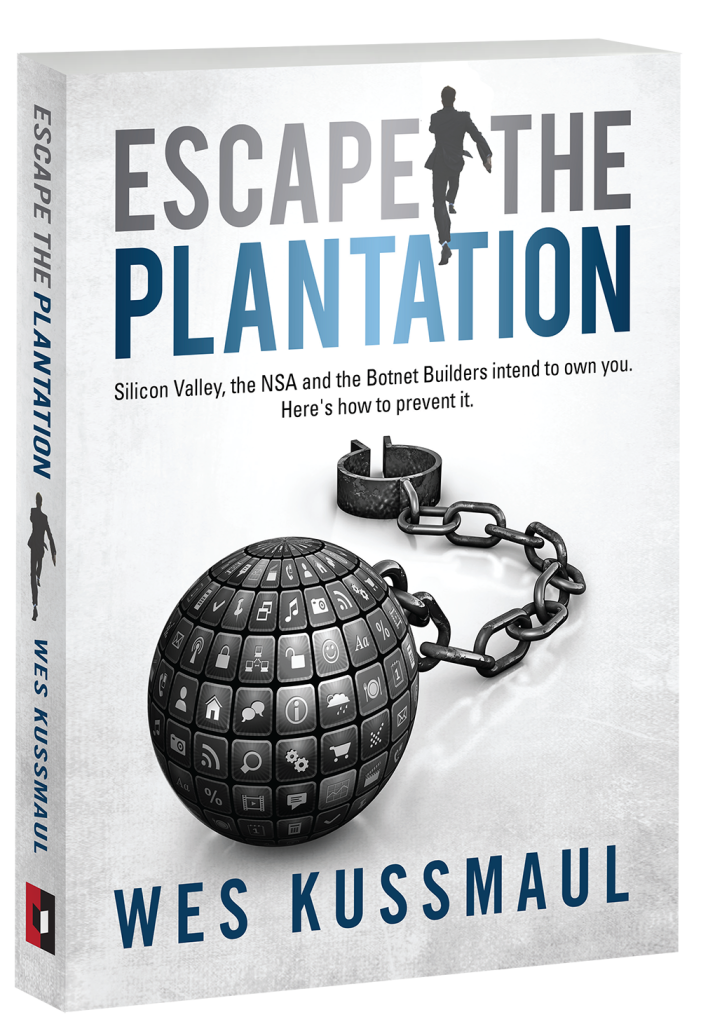
Everyone deserves authenticity and accountability online. That is the mission we are working on. Subscribe to join us, and get a free copy of Wes Kussmaul’s Escape the Plantation.
This article is general information, not legal advice. Laws differ by country — consult a qualified lawyer about your situation.