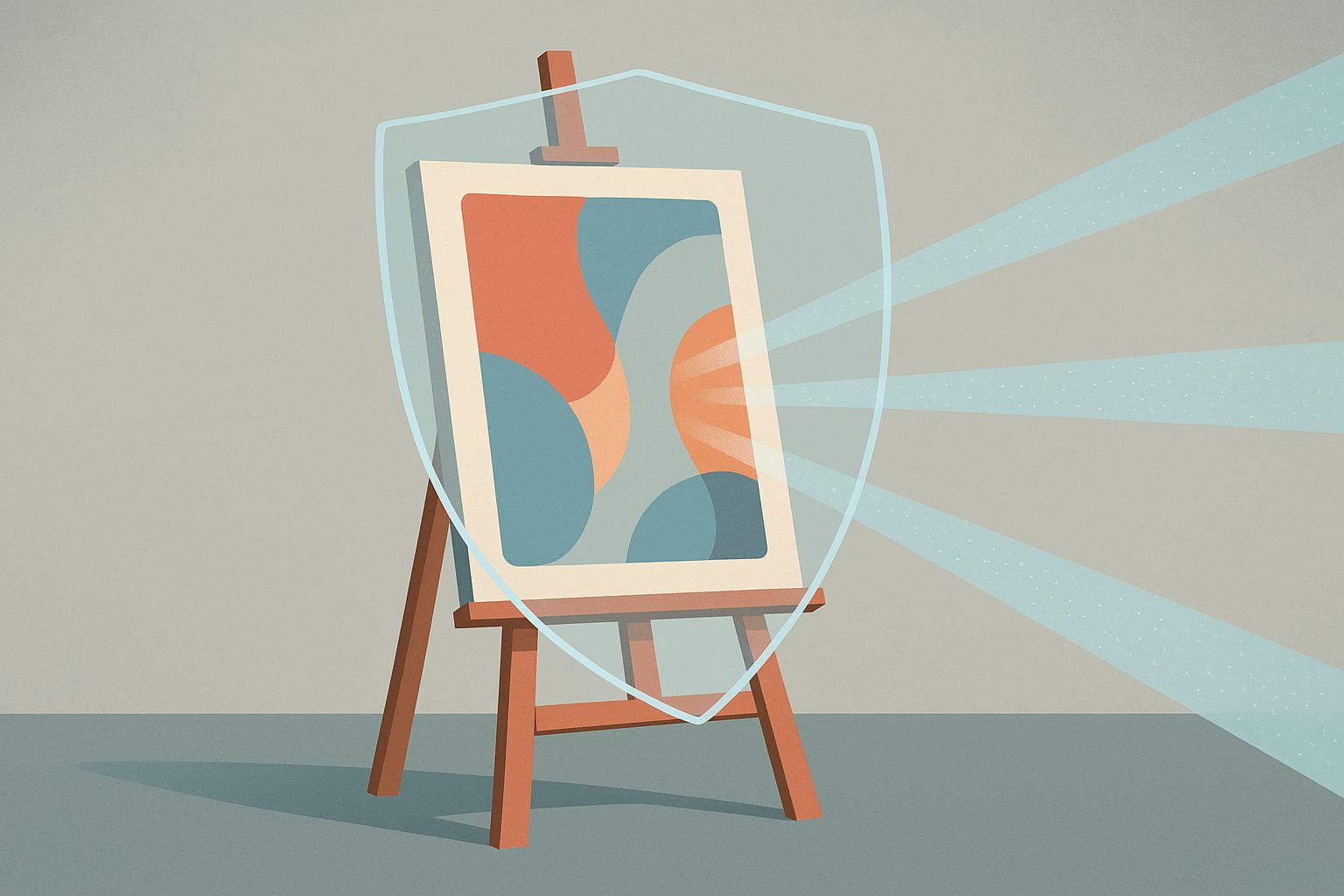
If you want to know how to protect art from AI, the honest answer is that no single tool can stop every model from learning from images you post publicly. What works is a layered approach: cloak images before you share them, block AI crawlers where you control the site, opt out where platforms let you, and keep the records you need to enforce your copyright.
This guide covers what each layer really does, where it fails, and what the law in the US, the UK and the EU says about AI training on your work as of late 2026.
Why AI models use your art
Image generators learn from huge collections of pictures gathered from the open web, often by automated crawlers. If your portfolio, social posts or shop listings are public, they may already have been collected. You cannot pull work back out of a model that has already been trained, so the steps below are mostly about what you post from now on.
One legal point shapes everything else: copyright protects your specific works, not your style. A model that produces new images in a style like yours may not infringe your copyright at all, even if it feels like copying. That is why technical defences matter alongside legal ones.
How to protect art from AI: seven practical steps
1. Cloak images with Glaze or Nightshade
Glaze and Nightshade are free tools from the Glaze Project at the University of Chicago. Glaze adds tiny changes to an image so that AI models misread its style, which defends against style mimicry. Nightshade goes further and alters how a model reads the content of an image, so that training on it degrades the model. Download them only from the project’s official site.
They are not bulletproof. In 2025 a team of university researchers presented a method called LightShed that could detect images protected by Nightshade with very high accuracy and remove much of the protection. Treat cloaking as one layer that raises the cost of using your work, not a guarantee. Changes can also be more visible on flat colours and smooth backgrounds, so check your results at the settings you choose.
2. Post smaller, cropped or watermarked versions
Share web-sized images rather than full resolution files, and keep originals offline. A visible watermark will not stop training, but it discourages casual reuse and helps you prove an image came from you when you file a takedown.
3. Block AI crawlers on your own website
If you run your own portfolio site, add rules to your robots.txt file that disallow known AI training crawlers. Common ones include GPTBot (OpenAI), Google-Extended (Google’s control for AI training), CCBot (Common Crawl), ClaudeBot (Anthropic) and Applebot-Extended (Apple). Robots.txt is a request, not a lock, and only well-behaved crawlers obey it, but the major companies say they honour it.
If you are in the EU or sell there, also add a clear statement to your site terms reserving your rights against text and data mining. EU law treats a machine-readable reservation as an opt-out from commercial data mining.
4. Check the AI settings on every platform you use
Many platforms have added settings or forms that control whether your public posts are used for AI training. Meta has offered users in the UK and EU a way to object to their public content being used to train its AI. Look in privacy and data settings, read any terms update that mentions AI or machine learning, and consider moving your portfolio to platforms that publicly refuse to license uploads for training.
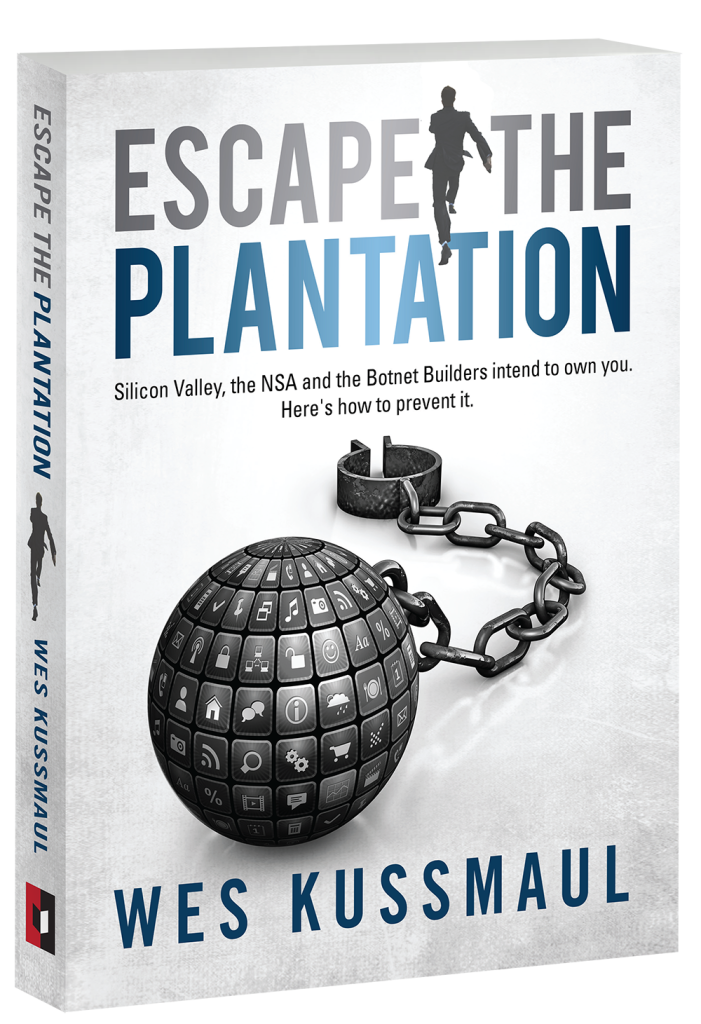
Whether your creative work belongs to you or to whoever scrapes it is part of a bigger question about who controls your identity online, the theme of Wes Kussmaul’s Escape the Plantation, and you can get a free copy at the end of this article.
5. Keep proof that the work is yours
Save layered files, sketches, dated drafts and original exports. In the US, register important works with the Copyright Office. Registration is needed before you can sue over a US work, and registering before infringement or within three months of publication makes statutory damages and legal fees available. Our guide on how to copyright a photo walks through registration and proof.
6. Watch for copies and takedown misuse
Run reverse image searches on key pieces every few months. If someone posts your art, or AI images that reproduce it closely, use a DMCA takedown or the platform’s copyright form. If accounts are passing your work off as theirs, follow our guide for when someone is using your photos.
7. Read licences before you sign
Stock sites, publishers and clients increasingly ask for AI training rights. Check the contract for words such as machine learning, training or derivative datasets before you agree. Our checklist on licensing your work for AI training lists the questions to ask.
What the law says about AI training on your art
United States
Copyright protects your work from the moment it is fixed, but whether training an AI model on it is fair use is being decided case by case in the courts, and results so far have been mixed. Until the law settles, registration and clear records give you the strongest position if a model or user reproduces your actual works.
United Kingdom
Copyright is automatic in the UK, with no registration system. In 2024 the government proposed letting AI developers train on copyright works unless creators opted out. After strong opposition, its report published on 18 March 2026 said a broad exception with an opt-out was no longer its preferred approach, and it chose not to change copyright law for now while it gathers more evidence. The report also pointed to support for stronger protection against unauthorised AI replicas of a person’s image and voice.
European Union
EU law allows commercial text and data mining unless the rights holder has reserved their rights in an appropriate way, such as machine-readable signals on a website. Since August 2025, the EU AI Act has required providers of general-purpose AI models to have a policy for respecting those reservations and to publish a summary of their training content.
How to tell if your work was already used
There is no complete public list of what any model was trained on. Some datasets have been documented by researchers and journalists, and the EU training summaries should add more detail over time. Our guide to checking AI training datasets explains how people have found their work in known collections.
Frequently asked questions
Can you stop AI from using your art completely?
No. Once an image is public, you cannot guarantee that no crawler or person will collect it. You can make it harder and less useful to train on, and you can enforce your rights against copies.
Does Glaze or Nightshade still work in 2026?
They still add protection and remain widely used, but researchers have shown ways to detect and weaken them. Use them as one layer alongside opt-outs and good records.
How do I protect my art from AI without Glaze?
Post lower-resolution images, use watermarks, block AI crawlers on your own site, switch off AI training in platform settings, reserve your rights in your site terms and register key works where registration exists.
Is it legal for AI to train on my art?
It depends on where it happens and how. In the US it turns on fair use, which courts are still deciding. In the EU it depends partly on whether you reserved your rights. In the UK the government has paused plans to change the law.
Is art style protected by copyright?
Generally no. Copyright protects specific works, not a style or technique. A close copy of a particular piece can infringe, but a new image in a similar style usually does not.
Related reading
- AI Copyright Consent: Why Nobody Asked You First
- DMCA Takedown: How to Get Stolen Work Removed
- How to Copyright a Photo: Registration, Proof and Protection
- Someone Using My Photos? How to Find and Remove Fakes
AI scraping is what happens when your work, like your identity, is treated as raw material for others to take. Wes Kussmaul’s Escape the Plantation sets out a different model: an identity you own and control, where people and companies stay accountable for what they do with your work while you choose how much of yourself to reveal. Enter your email below to get your free copy and follow Personal IP’s work on protecting creators and their digital footprint.
This article is general information, not legal advice. Laws differ by country, so consult a qualified lawyer about your situation.